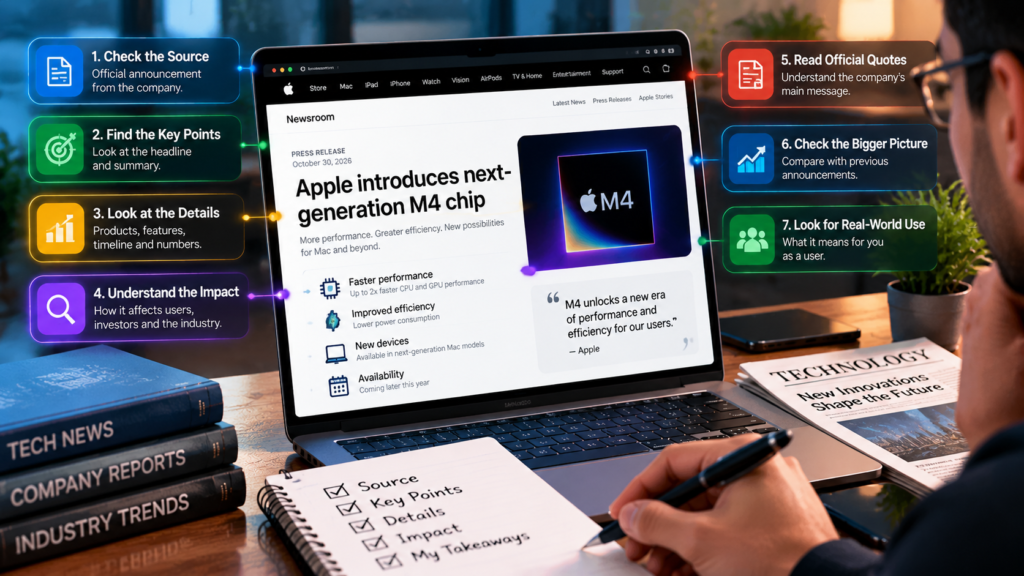
Company announcements can explain product features, partnerships, financial plans and security changes. They are useful sources, but they represent the company's own statements.
Identify the claim
Separate confirmed details from ambitions, forecasts and marketing language. A planned feature is not the same as a feature available to customers today.
Check availability
Look for release dates, supported countries, device compatibility, pricing and eligibility. These details can be more useful than broad promotional claims.
Seek independent context
Compare the announcement with technical documentation, hands-on testing, regulatory filings or independent reporting where relevant.
Keep a record
For decisions that matter, save the announcement date and link. Product details can change after launch.
The takeaway
Use company statements to understand what is being announced, then verify the practical implications.
('How to verify the details', 'Look for primary documents, named sources, publication dates and precise wording. Distinguish a product announcement from a shipping product, a research result from a commercial service, and a forecast from a confirmed outcome. If independent confirmation is unavailable, say so rather than treating a claim as settled.')
('What readers should take away', 'A useful technology report explains who is affected, what has changed, when it applies and what remains unknown. Readers should be able to follow the source trail and understand whether the story is news, analysis, opinion or promotional material.')
Frequently asked questions
How can readers check whether this technology information is reliable?
Trace the claim to a primary source, check the date and seek independent confirmation for important details.
Why does context matter?
Specifications, availability and best practices can differ by product, region and date. Check current official documentation before making a purchase or changing an important system.